
Four Prongs or Six? Which Setting Is Right for Your Diamond?

Most round diamonds look good in either a four-prong or six-prong setting. That's the honest answer. But "good" and "right" are different things, and the choice matters more than most people think.
We manufacture both styles daily in our Antwerp workshop. After casting thousands of each, we've noticed the decision usually comes down to one thing: what matters more to you, maximum sparkle or maximum security?
Quick Comparison
| Feature | Four-Prong | Six-Prong |
|---|---|---|
| Diamond visibility | More of the stone exposed | Slightly more metal coverage |
| Light performance | Maximum brilliance | Very slightly less (minimal difference) |
| Security | Secure with regular maintenance | Extra redundancy if a prong wears |
| Best for | Smaller to medium stones, modern designs | Larger stones, active lifestyles |
| Look | Clean and contemporary | Classic and traditional |
What Prongs Actually Do
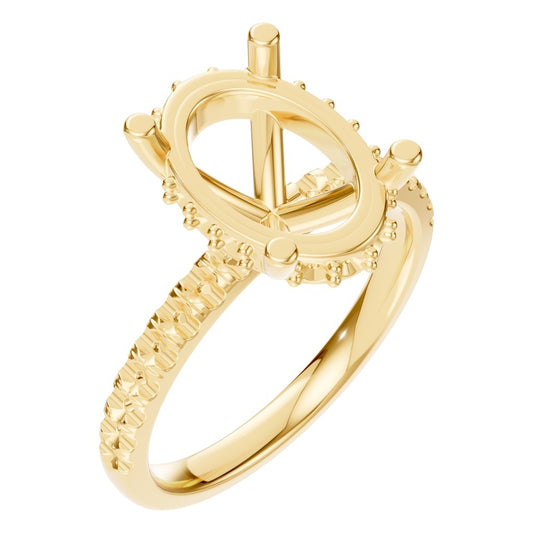
Prongs are the small metal claws that grip your center stone. They're part of the head of the mounting, and they do more work than their size suggests.

A good prong does two jobs at once. It holds the diamond firmly against the seat (the flat ledge inside the head where the stone rests). And it stays thin enough that light can still flood into the stone from the sides.
The number of prongs changes the balance between those two jobs. Fewer prongs means more light gets in. More prongs means the grip is distributed across more contact points.
Four-Prong Settings

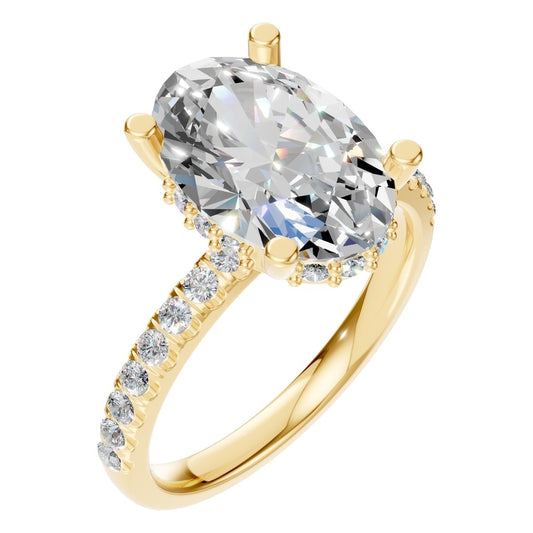
A four-prong setting uses four evenly spaced claws, one at each "corner" of the stone. This leaves the maximum amount of diamond surface exposed to light.
Why jewelers choose four prongs:The diamond appears slightly larger. With less metal covering the girdle, more of the stone's face is visible. On a 1-carat round brilliant, the difference is subtle in photos but noticeable in person.
Light performance is maximized. More open sides mean more light enters the pavilion from different angles. In our experience, customers notice this most under natural daylight.
The setting looks cleaner. Four prongs create a minimal, modern profile. The diamond feels like it's floating. This works particularly well on thin shanks and delicate band designs.
What to keep in mind:Four prongs carry slightly less redundancy than six. If one prong catches on something and lifts, you're down to three points of contact. That's still secure in most cases, but it means regular prong checks matter more. We recommend inspections every 6 months for four-prong rings worn daily.
For round stones, four prongs sit at 12, 3, 6, and 9 o'clock positions. This can make the diamond appear slightly more square when viewed from above. Some people love this. Others prefer the rounder silhouette of six prongs.
Six-Prong Settings

A six-prong setting adds two extra contact points, distributing the hold more evenly around the diamond's circumference. This is the classic Tiffany-style configuration.
Why jewelers choose six prongs:Security is the obvious one. Six points of contact mean the stone is gripped from more angles. If one prong sustains damage, five others are still doing their job. For stones over 1.5 carats, we generally recommend six prongs because the investment warrants the extra protection.
The diamond stays rounder. Six evenly spaced prongs maintain the circular outline of a round brilliant better than four prongs do. If preserving that perfect round shape matters to the design, six prongs deliver.
Peace of mind for active lifestyles. Customers who work with their hands, exercise frequently, or simply prefer not to worry about their ring tend to gravitate toward six prongs.
What to keep in mind:Six prongs cover a bit more of the diamond's edge. The difference in visible diamond surface is genuinely small (we're talking fractions of a millimeter per prong), but on smaller stones under 0.50 carats, six prongs can start to feel heavy relative to the diamond.
Slightly less light enters from the sides. In practice, this difference is hard to spot with the naked eye. It becomes more relevant in specific lighting conditions and for buyers who are comparing side-by-side.
How to Choose
Forget "better" or "worse." Think about fit.
Consider the diamond size. For stones under 0.75 carats, four prongs almost always look cleaner. The diamond is small enough that security isn't a major concern, and you want every fraction of sparkle visible. Above 1.5 carats, six prongs make more sense because the stone's value justifies the extra hold and the prongs stay proportional to the diamond.Between 0.75 and 1.5 carats? Either works beautifully. This is where personal preference and lifestyle take over.
Consider the wearer's lifestyle. Does this ring come off for exercise, gardening, cooking? Or does it stay on 24/7 through everything? If it's a never-take-it-off ring, lean toward six prongs. The added security reduces the chance of prong damage over years of constant wear. Consider the design direction. Four prongs pair well with modern, minimalist settings. Thin shanks, clean lines, contemporary silhouettes. Six prongs feel more classic and traditional. They work well with cathedral settings, vintage-inspired designs, and heavier band profiles. Consider the diamond shape. Round brilliants work in both configurations. But fancy shapes change the calculation. Marquise and pear shapes often use V-prongs at the pointed ends regardless of total prong count. Oval diamonds can use four or six, though six prongs help prevent the "bowtie" effect from being emphasized.
Prong Maintenance (Either Way)
Whichever you choose, prong settings need periodic attention.
We recommend professional prong inspections every 6 to 12 months. A jeweler checks each prong for wear, lifting, or thinning. Catching a problem early is the difference between a simple retip (tightening the prong) and a lost diamond.
Signs a prong needs attention: the diamond feels loose when gently pressed, a prong tip looks flattened or thin, or you notice the stone sitting slightly crooked. Don't wait if you see any of these.
FAQ
Does a six-prong setting make a diamond look smaller?
Barely. Each prong covers maybe 0.3mm of the diamond's girdle. Six prongs instead of four adds roughly 0.6mm of total metal coverage. On a 6.5mm round diamond (about 1 carat), that's less than 10% of the circumference. Most people can't tell the difference without holding both versions side by side.
Is a four-prong setting secure enough for daily wear?
Yes. Millions of engagement rings worldwide use four-prong settings and are worn every day without issues. The key is quality manufacturing (consistent prong thickness, proper seat cutting) and regular inspections. A well-made four-prong setting from a reputable manufacturer is absolutely safe for daily wear.
Which setting is better for an oval diamond?
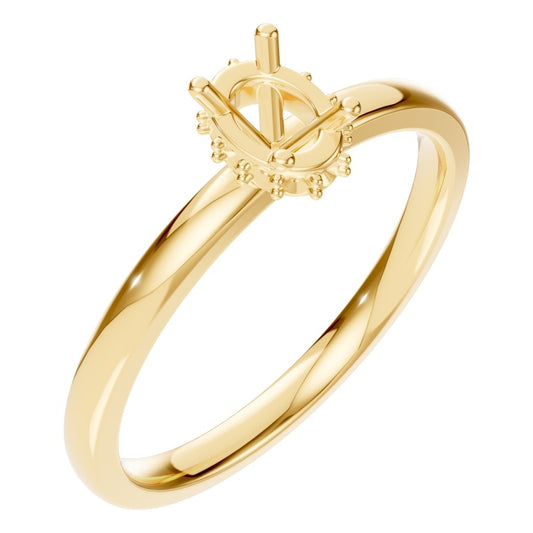
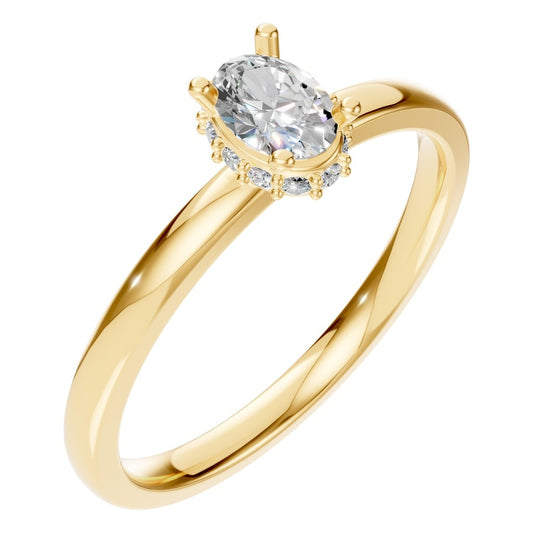
Both work well for ovals. Four prongs (placed at the compass points) give an oval stone maximum light exposure. Six prongs (with the two extra points along the long axis) add stability for larger ovals. If the oval is over 1.5 carats or has a length-to-width ratio above 1.5:1, six prongs provide better proportional support.
How often should prongs be checked?
Every 6 to 12 months for rings worn daily. If the ring is only worn occasionally, annual checks are sufficient. Any time you notice the stone moving, clicking, or sitting differently, get it inspected immediately. Prevention is always cheaper than stone replacement.
Can prongs be added or removed later?
Not easily. The head of a mounting is designed for a specific number of prongs, and changing it means replacing the entire head. That's technically possible but equivalent to a partial remount. It's better to choose the right prong count from the start.
Browse Our Ring Mountings
We carry both four-prong and six-prong mountings in 14K and 18K gold (white, yellow, and rose). All manufactured in our Antwerp workshop. No minimum order.
Browse solitaire ring mountings or see our full ring collection to find the right setting for your next project.Once you've chosen your mounting, keep it looking sharp with our guide on how to clean gold jewelry at home. Want to compare all setting types? See our full types of ring settings guide.
Looking for gold mountings?
Browse our catalog of 14K and 18K gold mountings, or get in touch for custom modifications.
Browse Catalog