
Types of Ring Settings: A Complete Guide From the Manufacturer

A ring setting is the metalwork that holds a gemstone in place. It determines how the stone looks, how secure it is, and how the ring feels on your finger. Choosing the right setting is as important as choosing the right stone.

We manufacture all of these setting types in our workshop. Here's what each one looks like, how it performs, and when it makes sense.
Prong Setting (Claw Setting)
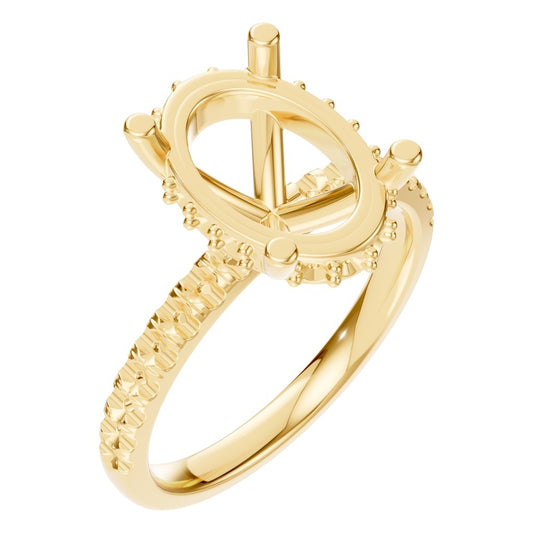
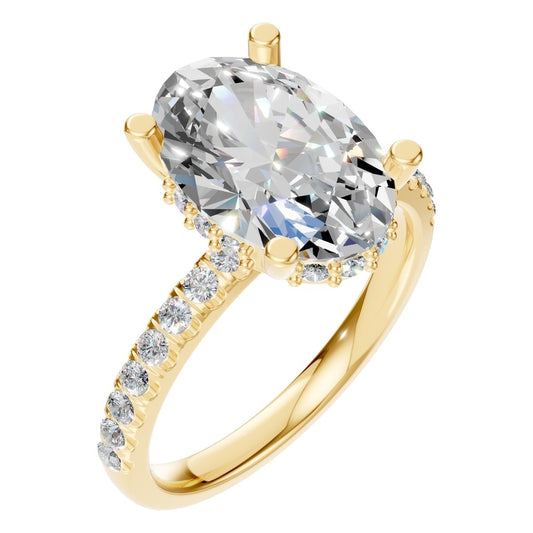
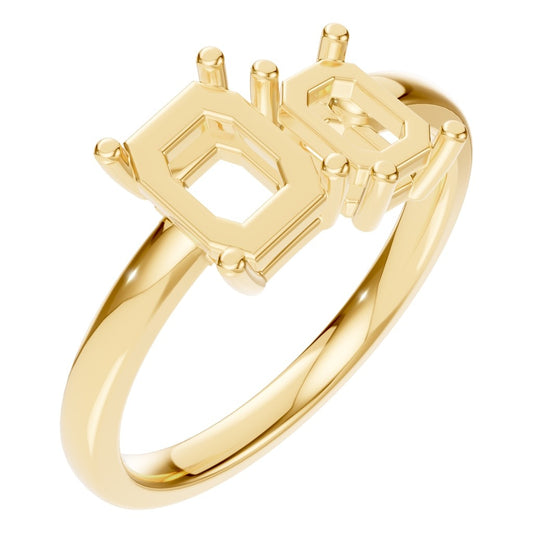
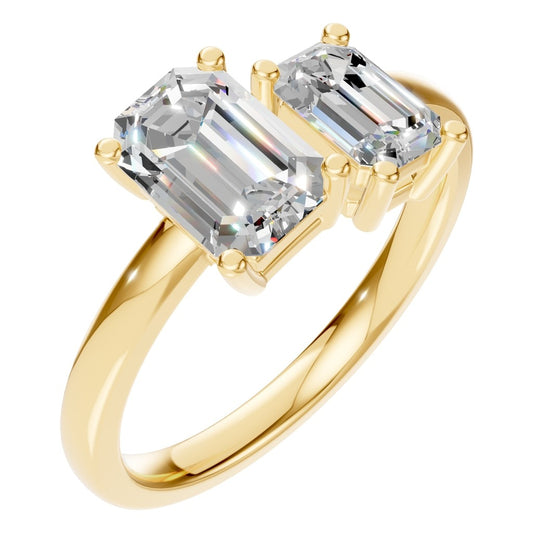
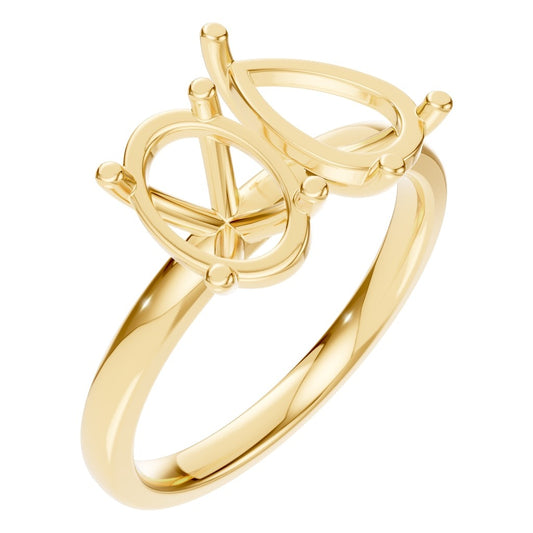
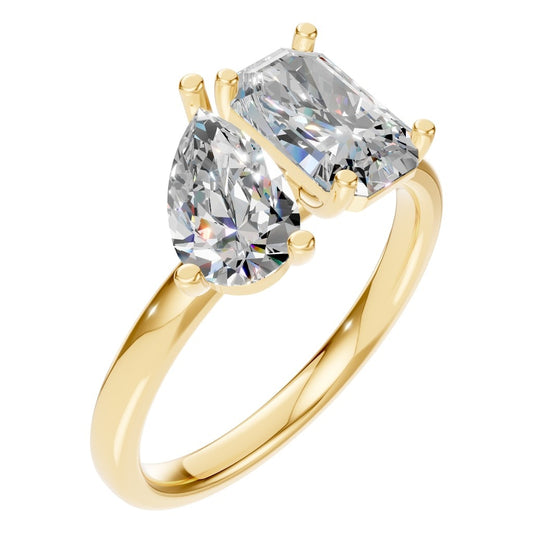
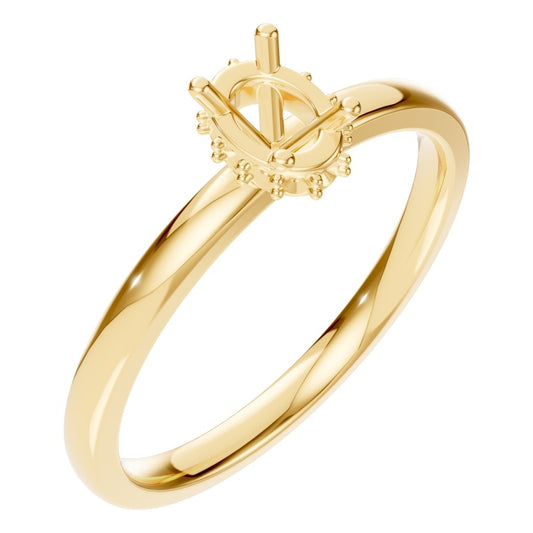
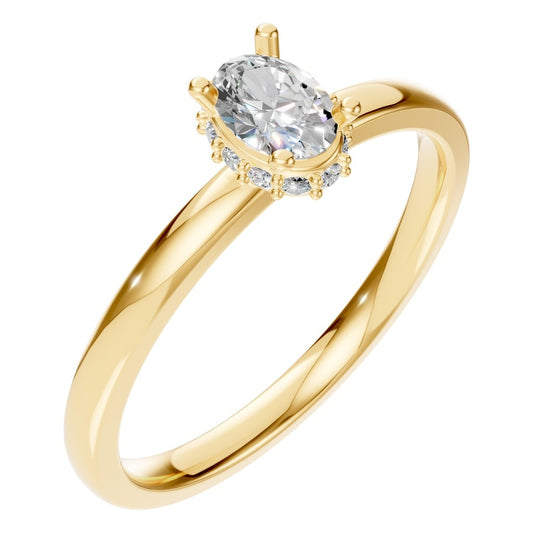
The most common setting for engagement rings. Metal prongs (typically 4 or 6) grip the stone at its girdle and hold it elevated above the band.
How it works: Individual metal claws extend from the base of the setting and bend over the stone's edge, securing it from multiple points. Pros:- Maximum light enters the stone from all angles (best brilliance)
- Stone appears larger due to minimal metal coverage
- Works with virtually any stone shape
- Easy to clean underneath the stone
- Relatively simple to resize
- Prongs can catch on fabrics and hair
- Prongs wear over time and need periodic retipping
- Less protective than enclosed settings
- Stone sits higher, more exposed to impacts

Bezel Setting
A thin metal rim completely surrounds the stone's edge (girdle), holding it flush with the ring surface.
How it works: A collar of metal is pushed or hammered over the stone's perimeter, locking it in place with continuous contact around the entire circumference. Pros:- Most secure setting type — stone is fully enclosed
- Very low profile, minimal snagging
- Protects stone edges from chips
- Excellent for active lifestyles
- Modern, clean aesthetic
- Less light enters from the sides (slightly less brilliance)
- Stone appears slightly smaller due to metal border
- More difficult to resize without disturbing the setting
- Not all stone shapes work equally well
Channel Setting
Stones sit inside a channel created by two parallel metal walls. No prongs, no individual settings. The stones are held by the walls pressing against their edges.
How it works: A groove is cut into the band, and stones are slid in from one end. The channel walls are then tightened to secure them. Pros:- Smooth surface — nothing to catch
- Stones are well protected
- Clean, linear aesthetic
- Good for wedding bands and eternity rings
- Comfortable for daily wear
- Stones must be uniform size (typically round or princess cut)
- If one stone loosens, others can follow
- Difficult to replace individual stones
- Less sparkle than prong-set stones
Pave Setting
Tiny stones are set close together across the ring surface, held by small beads of metal. The overall effect is a surface "paved" with diamonds.
How it works: Small holes are drilled into the metal surface. Stones are placed in the holes, and tiny metal beads are raised from the surrounding material to hold each stone in place. Pros:- Incredible sparkle — the surface shimmers from every angle
- Makes the band itself a visual feature, not just the center stone
- Can cover entire ring surfaces (eternity pave)
- Creates an expensive, detailed look
- Small stones can come loose over time
- Difficult and expensive to replace individual stones
- Requires skilled stone setting
- Not ideal for heavy daily abuse
- Can trap dirt in the tiny gaps
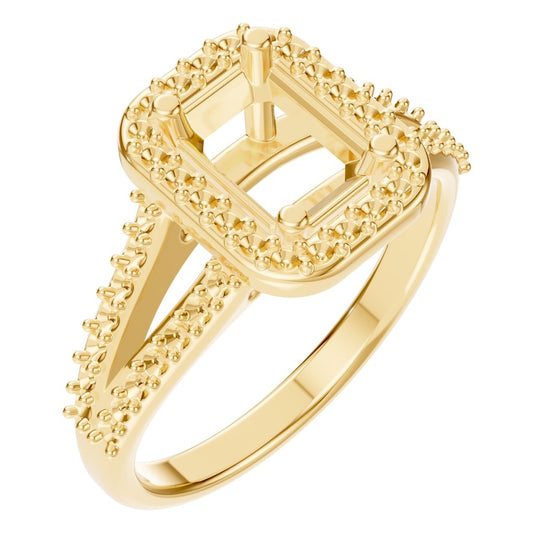
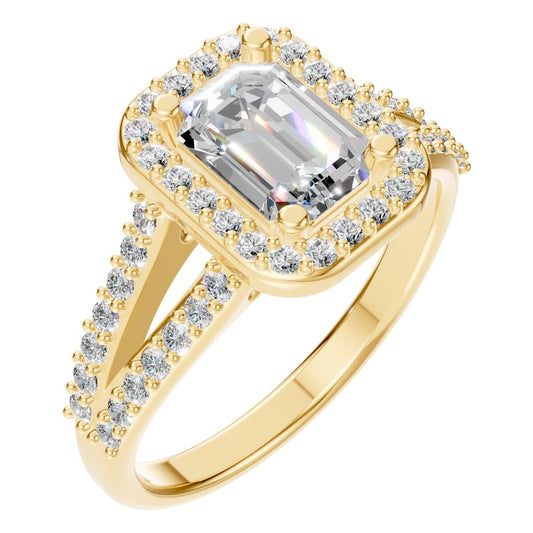
Halo Setting
A center stone surrounded by a frame of smaller stones (usually diamonds). The halo makes the center stone appear larger and adds overall sparkle.
How it works: The smaller halo stones are typically pave or micro-pave set into a raised platform that frames the center stone. The center itself is usually prong-set. Pros:- Center stone looks significantly larger (adds 0.5-1 carat visual impact)
- Incredible overall sparkle
- Versatile — works with all center stone shapes
- Can accommodate a smaller center stone without sacrificing presence
- Budget-friendly way to get a bigger look
- Small halo stones can loosen
- More complex to manufacture and repair
- Can overwhelm very small fingers
- Some find it "too much" — matter of taste
- Cleaning requires more attention
Cathedral Setting
The band rises up on both sides to meet the center stone, like the arches of a cathedral. This elevates the stone and frames it with sweeping metalwork.
How it works: The shank (band) curves upward into arches that cradle the head of the ring where the stone sits. The arches provide structural support and visual height. Pros:- Elegant, classic aesthetic
- Arches protect the stone from side impacts
- Allows a wedding band to sit flush against the engagement ring
- Adds height to showcase the center stone
- Structurally sound — the arches reinforce the setting
- Higher profile than flat settings (more exposed)
- Can complicate resizing if arches are structural
- The higher stone position means slightly more vulnerability to impacts
- Not everyone likes the elevated look
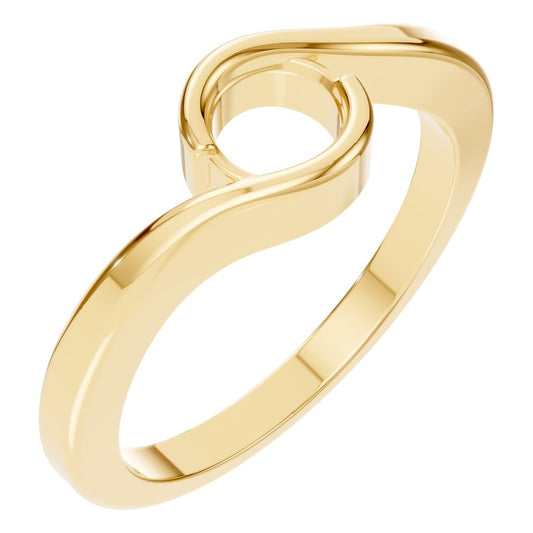
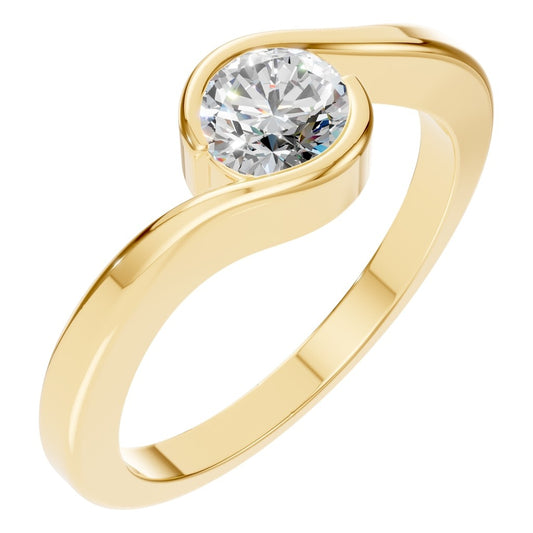
Tension Setting
The stone appears to float between the two ends of the band, held only by the pressure (tension) of the metal squeezing against it.
How it works: The band is manufactured with a precise gap slightly smaller than the stone. The metal's spring tension holds the stone by pressing against two opposite points on its girdle. Pros:- Stunning, modern aesthetic — stone appears to float
- Maximum light exposure (no metal below or around the stone)
- Unique, conversation-starting design
- Clean lines
- Not suitable for all stones (must be very hard — diamonds, sapphires)
- Cannot be easily resized (changes the tension calibration)
- Less secure than other settings if metal fatigues
- Limited to certain stone shapes and sizes
- If the band bends or deforms, the stone can come loose
Flush Setting (Gypsy Setting)
The stone sits inside a hole drilled into the metal surface, with the top of the stone level with (flush to) the ring surface.
How it works: A seat is cut into the metal, the stone is placed in it, and the surrounding metal is pushed over the stone's girdle to secure it flush with the surface. Pros:- Extremely smooth — nothing protrudes
- Maximum protection for the stone
- Ideal for rugged wear
- Clean, minimalist look
- Perfect for men's rings and wedding bands
- Stone appears smaller (only the table is visible)
- Less sparkle — light can only enter from the top
- Requires adequate metal thickness around the stone
- Limited stone size relative to band width
Comparison Table
| Setting | Security | Sparkle | Profile | Snagging | Best For |
|---|---|---|---|---|---|
| Prong (4) | Good | Excellent | High | Moderate | Engagement rings |
| Prong (6) | Very good | Excellent | High | Moderate | Round diamonds |
| Bezel | Excellent | Good | Low | None | Active lifestyles |
| Channel | Very good | Good | Low | None | Wedding bands |
| Pave | Good | Excellent | Low | None | Accent/halos |
| Halo | Very good | Excellent | Medium | Low | Size enhancement |
| Cathedral | Very good | Excellent | High | Low | Classic engagement |
| Tension | Good | Excellent | Medium | None | Modern design |
| Flush | Excellent | Fair | None | None | Men's/minimal |
How to Choose
Match the setting to the lifestyle:
Very active / works with hands: Bezel, flush, or channel. These settings won't catch, won't bend, and won't lose stones easily. Desk job / careful with jewelry: Prong, cathedral, or halo. You can enjoy the maximum sparkle without worrying about physical damage. Wants maximum sparkle: Prong setting for the center stone, with pave or micro-pave on the band. Wants to maximize apparent size: Halo setting. A 1-carat center with a halo looks like a 1.5-carat stone. Prefers clean, modern look: Bezel or tension. Both have architectural simplicity. Classic, timeless taste: Cathedral with a simple prong head. This is the silhouette most people picture when they think "engagement ring."FAQ
Which setting is most secure for diamonds?
Bezel is the most secure. The stone is completely surrounded by metal with no gaps. Flush settings are a close second. For prong settings, 6 prongs are more secure than 4. All properly manufactured settings are secure for normal wear.
Can I change the setting type after purchase?
Sometimes. Going from prong to bezel on the same ring requires a full remodel. But changing from 4-prong to 6-prong, or adding a halo, is more feasible. It depends on the ring's construction. Consult your jeweler.
Do certain settings work better with certain stone shapes?
Yes. Round stones work in any setting. Princess and emerald cuts do well in channel and bezel settings (the straight edges align with the metal). Marquise, pear, and oval shapes work best in prong settings where the tips need protection. Cushion cuts look particularly good in halos.
Which setting makes a diamond look biggest?
Prong setting (especially 4-prong) shows the most stone. Halo setting makes the overall cluster look largest. Bezel and flush settings make stones appear slightly smaller because the metal border covers part of the perimeter.
How much does the setting affect the ring's price?
The setting itself is typically 15-40% of the ring's total cost (excluding the center stone). Simple prong settings are least expensive to manufacture. Complex pave halos with many small stones are most expensive due to the additional diamonds and labor-intensive setting work.
Browse Our Settings
We manufacture all of these setting types in 14K and 18K gold (yellow, white, and rose). Every mounting in our catalog is crafted in our Antwerp workshop using the same manufacturing process described above.
Browse solitaire mountings | See halo designs | View our full ring collectionNot sure which setting suits your project? Get in touch and we'll help you find the right mounting for your stone and your customer's lifestyle.
Choosing between gold types? Read our guide on 14K vs 18K gold to pick the right metal for any setting style.
Looking for gold mountings?
Browse our catalog of 14K and 18K gold mountings, or get in touch for custom modifications.
Browse Catalog