
How Fine Jewelry Is Made: From 3D Design to Finished Ring

Most people never think about how their ring was made. They see the finished piece in a display case and that's it. But between the initial design and that polished ring, there are at least seven distinct steps, each requiring specific expertise and equipment.
We make jewelry in our Antwerp workshop using a process called investment casting (commonly known as lost wax casting). The "wax" part is now mostly 3D-printed resin, but the casting principles haven't changed in thousands of years.
Here's what the process actually looks like.

Step 1: 3D Design (CAD)
Every piece starts as a digital file. Using CAD software (computer-aided design), we create a precise 3D model of the ring, pendant, or mounting. This is where dimensions are set, stone seats are positioned, and wall thicknesses are calculated.
CAD gives us precision that hand carving can't match. Symmetry is perfect. Measurements are exact to hundredths of a millimeter. And the design can be revised quickly before any material is committed.
For custom orders, this is also where the client approves the design. They can see exactly what the finished piece will look like before production begins.
Step 2: 3D Printing (Resin Model)

The CAD file goes to a high-resolution resin printer. These aren't consumer-grade machines. Jewelry printers produce models at 25-50 micron layer resolution, creating surfaces smooth enough for direct casting.
The printer builds the model layer by layer in a castable resin. This resin is formulated to burn out cleanly during casting, leaving no ash residue in the mold.
The printed model is an exact physical copy of the digital design. At this stage, we can also inspect the piece for any structural issues before moving to casting.
Step 3: Building the Wax Tree

Multiple resin models are attached to a central wax rod called a sprue, creating what looks like a tree with jewelry pieces as the "branches." This tree structure allows molten metal to flow to each piece simultaneously during casting.
The positioning on the tree matters. Pieces need to be angled correctly so metal flows into every detail without trapping air bubbles. This is part engineering, part experience.
Step 4: Investment (Creating the Mold)
The wax tree is placed inside a steel cylinder (called a flask) and surrounded with a plaster-like material called investment. This slurry hardens into a solid block, encasing every detail of the resin models.
The flask then goes into a burnout oven. Over several hours, the temperature gradually increases to around 730C. The resin models melt and vaporize completely, leaving behind perfect negative-space cavities in the investment. This is why it's called "lost wax" casting.
Step 5: Casting
With the mold heated and empty, molten gold is introduced. Depending on the setup, this happens through centrifugal force (spinning the flask) or vacuum-assisted pressure. The liquid metal fills every cavity, capturing details as fine as fingerprint-level texture.
The metal we pour depends on the order: 14K yellow, 18K white, rose gold, or any specific alloy composition. Each has its own melting point and flow characteristics.
After casting, the flask is quenched in water. The investment dissolves, revealing the metal tree with all the pieces attached.
Step 6: Cleaning and Finishing
Each piece is cut from the tree and the sprue attachment point (where the piece connected to the main rod) is filed smooth. This is the point where the jewelry transitions from raw casting to finished piece.
The finishing process includes:
- Filing and sanding to remove any casting imperfections
- Pre-polishing with progressively finer abrasives
- Final polishing to achieve the desired surface finish (mirror, satin, matte, or brushed)
- Cleaning in an ultrasonic bath to remove polishing compounds
Step 7: Quality Control and Stone Setting
Before a mounting leaves our workshop, it goes through inspection. We check:
- Dimensional accuracy against the original CAD file
- Surface quality (no pits, porosity, or inclusions)
- Prong positioning and strength
- Overall symmetry and finish
Why This Process Matters for Quality
Investment casting with 3D-printed models gives us advantages that affect the final piece:
Consistency. Every piece from the same CAD file is identical. If you order the same mounting twice, both will match exactly. Precision. Stone seats are positioned to within 0.05mm. Prongs are uniform. Walls have consistent thickness throughout. Complexity. Designs that would be impossible to fabricate by hand (intricate filigree, internal channels, complex pavé layouts) are straightforward to cast from a 3D-printed model. Efficiency. Multiple units of the same design can be produced simultaneously without sacrificing quality on any individual piece.Traditional vs Modern: What Changed?
The casting process itself is ancient. Goldsmiths have been using lost wax casting for over 5,000 years. What's changed is how the original model is made:
| Step | Traditional | Modern |
|---|---|---|
| Design | Hand sketch | CAD software (3D digital) |
| Model creation | Hand-carved wax | 3D-printed resin |
| Mold making | Same (investment) | Same (investment) |
| Casting | Same (centrifugal/vacuum) | Same (centrifugal/vacuum) |
| Finishing | Same (hand polishing) | Same (hand polishing) |
FAQ
Is 3D-printed jewelry lower quality than handmade?
No. The 3D printing only creates the model (pattern) for casting. The final piece is solid cast gold, identical in material to any handmade piece. In fact, 3D-printed models often produce more consistent results because the precision eliminates human error in measurements and symmetry.
How long does it take to manufacture a ring?
From approved CAD file to finished, polished piece: typically 5-7 working days. Rush orders can be done in 3-4 days. The printing takes hours, investment and burnout takes a day, casting is minutes, and finishing is 1-2 days depending on complexity.
Can any design be cast?
Almost. The main limitations are wall thickness (below 0.4mm is risky), fully enclosed cavities (the investment can't get inside to create the void), and pieces that would trap air during casting. A good CAD designer accounts for these constraints from the start.
What's the difference between cast and fabricated jewelry?
Cast pieces start as liquid metal poured into a mold. Fabricated pieces are built by shaping, bending, and soldering metal sheet and wire by hand. Both produce high-quality results. Casting is better for complex shapes and production runs. Fabrication is better for simple geometric pieces and one-offs where setting up a mold isn't worth it.
Does the type of gold affect the casting process?
Yes. Different alloys have different melting points and flow characteristics. 18K yellow gold flows slightly differently than 14K. White gold alloys (especially palladium-based) require higher temperatures. Rose gold, with its higher copper content, can be trickier to cast in very thin sections. Our casting parameters are calibrated for each alloy we work with.
See It In Practice
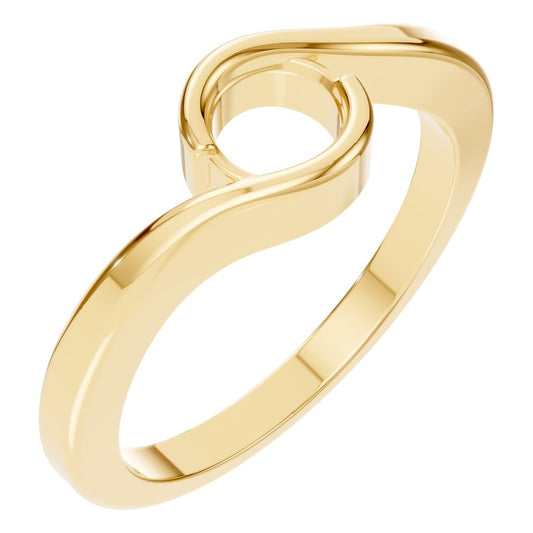
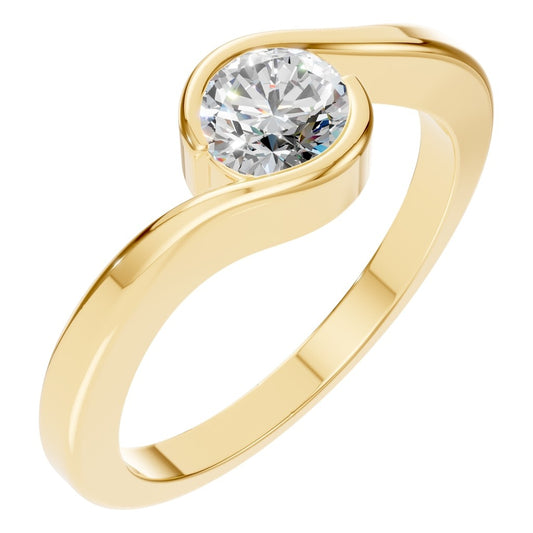
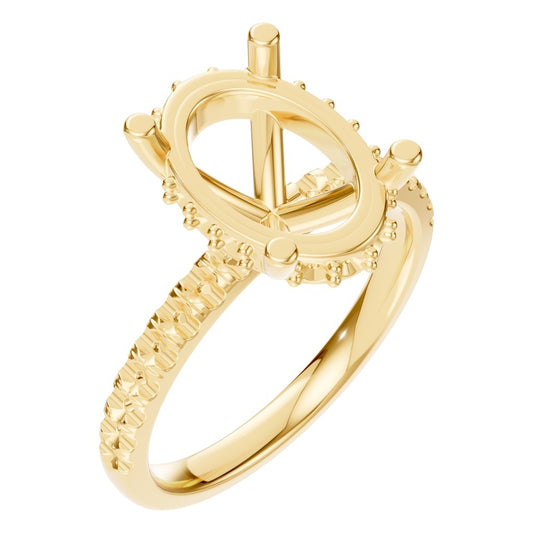
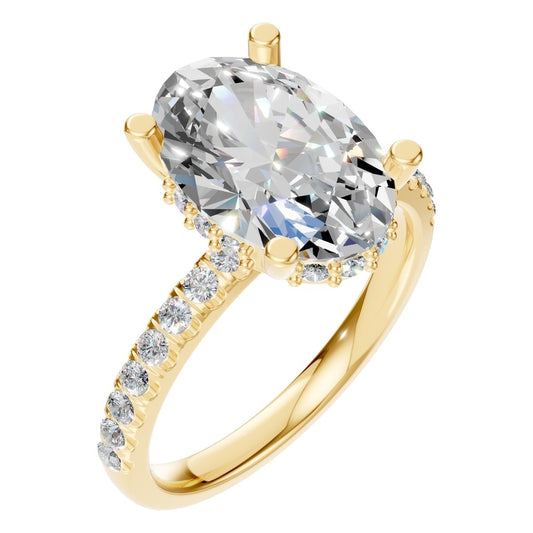
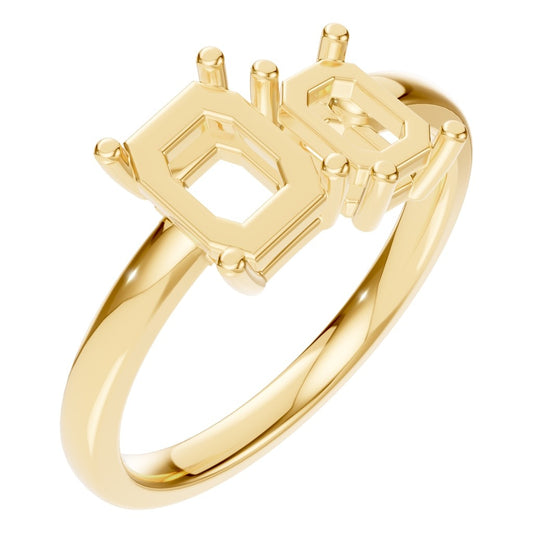
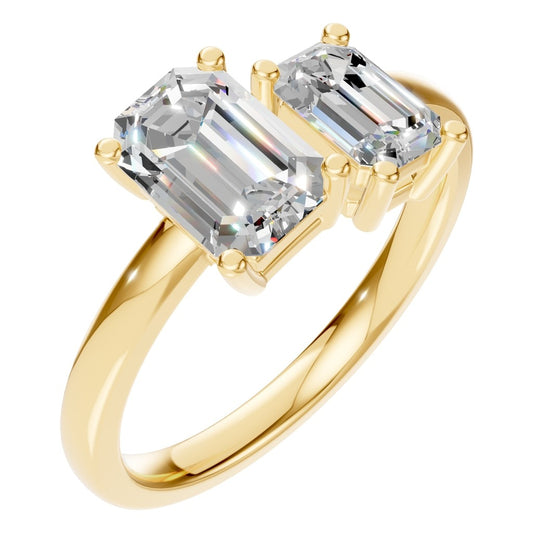
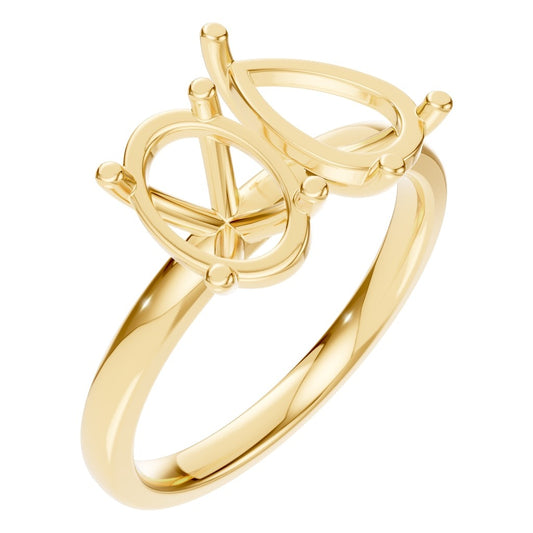
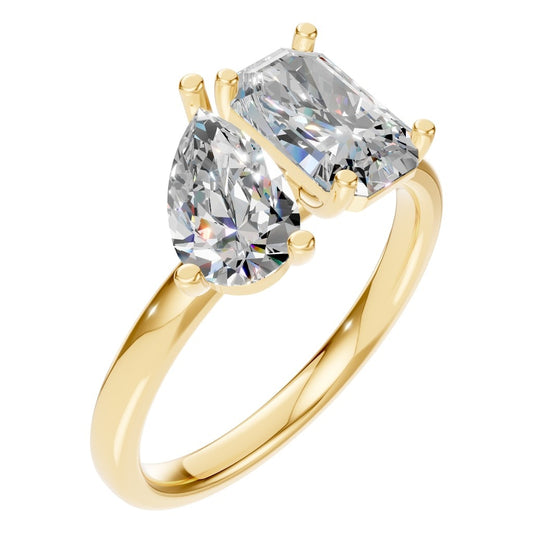
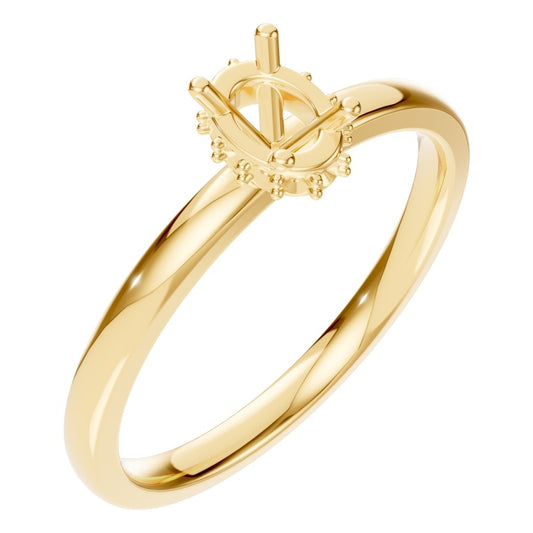
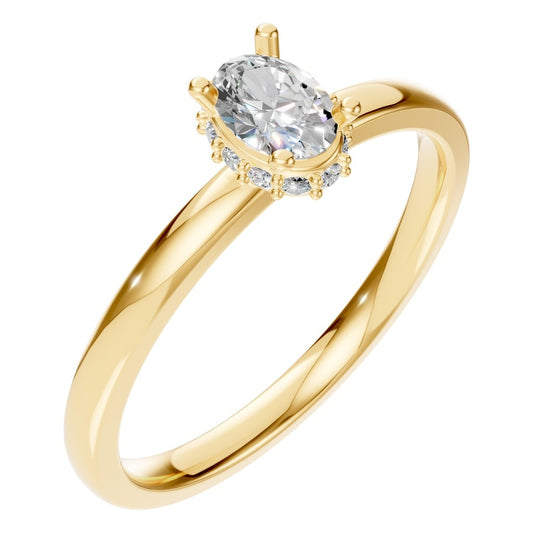
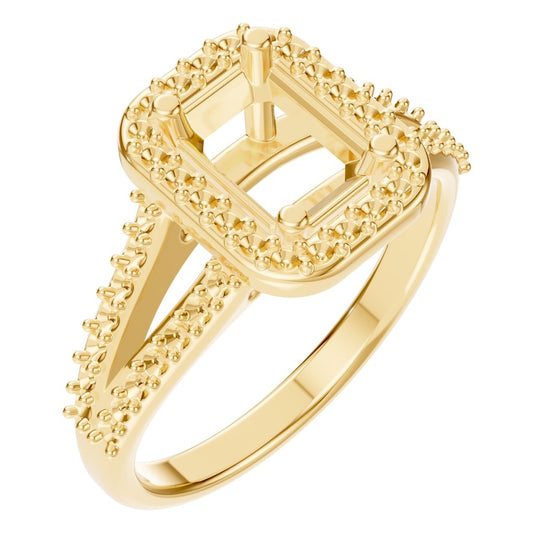
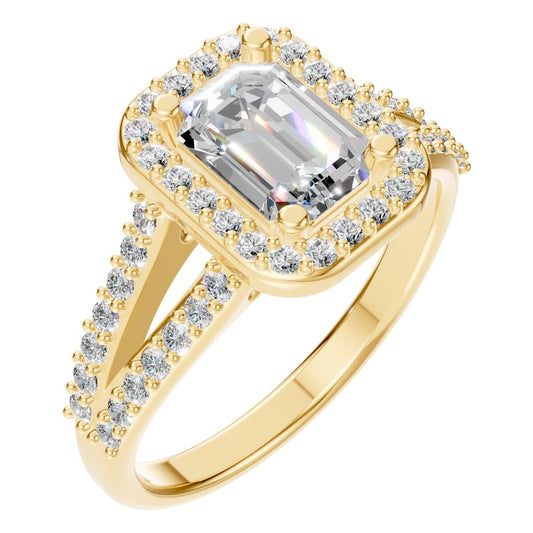
Every ring mounting in our catalog goes through this exact process. From the simplest solitaire to the most complex halo design, the craftsmanship is the same.
Browse our ring mountings to see the finished results, or read more about choosing between 14K and 18K gold for your next project. If you have a custom design in mind, contact us with your specifications and we'll walk you through the production process for your specific piece.Looking for gold mountings?
Browse our catalog of 14K and 18K gold mountings, or get in touch for custom modifications.
Browse Catalog